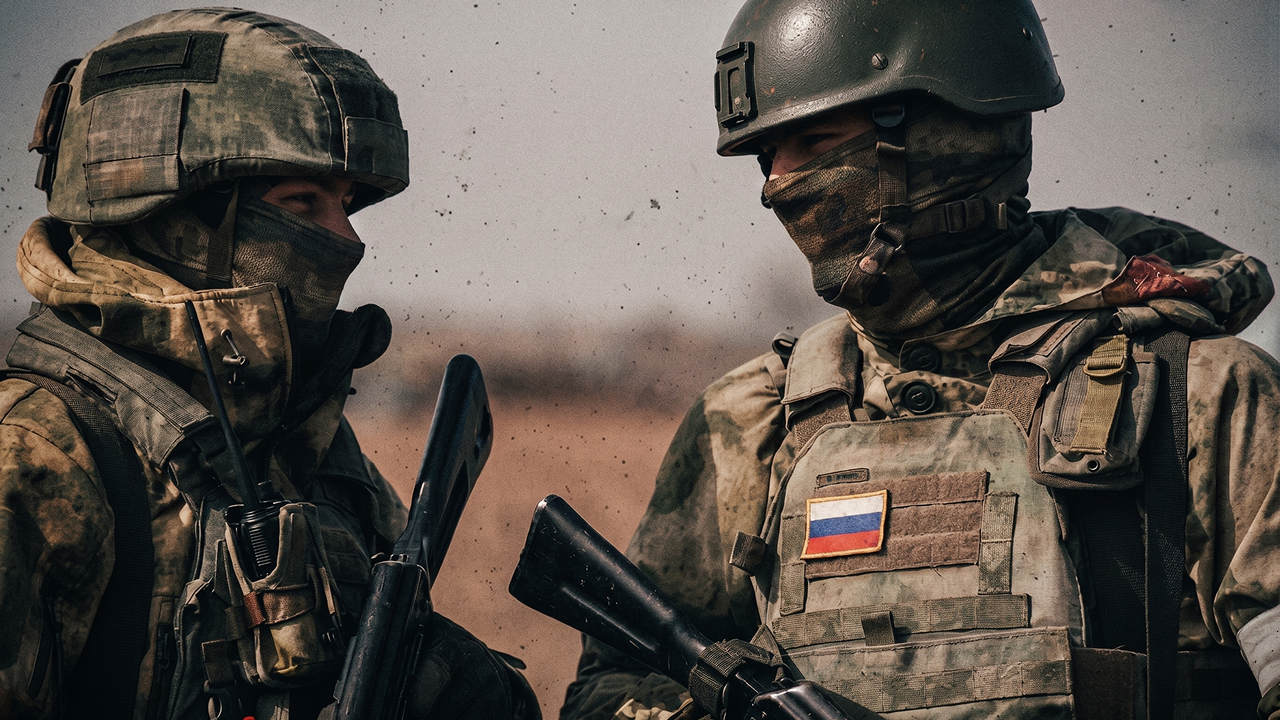
The kremlin continues its efforts to expand its influence in Africa, relying not so much on the economy, culture, or politics as on force and war.
The driving force behind this strategy remains the “african corps” — a structure under the control of the russian ministry of defence, formed from the remnants of the “wagner” PMC.
The russians themselves acknowledge that units of the “african corps” have proven largely ineffective in countering insurgent groups, while maintaining them is excessively expensive.
The formation has a number of systemic shortcomings. In particular, it is primarily focused on training and security tasks and is not prepared to conduct asymmetric warfare against numerous insurgent groups.
Due to excessive bureaucracy and a complex, rigid command hierarchy, the leadership of the “african corps” is far too slow in making decisions. This is also linked to a lack of initiative among commanders “on the ground.”
Such delays in decision-making result in a loss of the ability to respond promptly to insurgent actions, as they have to wait for the green light from moscow.
This has already led to the loss of facilities important to local totalitarian leaders and the kremlin, significant personnel and equipment losses among local forces, as well as the loss of control over vast territories — particularly in Mali.
This situation has caused dissatisfaction among the governments of Mali and Burkina Faso controlled by the kremlin, as they pay for the maintenance of russian mercenaries from their own budgets.
It is worth recalling that in early July 2026, local insurgent groups in Mali ambushed russians and forces of the local junta, inflicting significant losses on them.
The payment model for these “services” is hybrid in nature. It combines “white” intergovernmental financial settlements with schemes typical of russian PMCs such as “wagner.” At the same time, in exchange for its services, the kremlin, through the ministry of defence, gains access to mineral resources effectively stolen from local peoples.
Overall, the “african corps” remains combat-capable but is unable to turn the situation in favor of local regimes without deploying significantly larger quantities of equipment and personnel.
The kremlin spares no equipment for its african thugs — it supplies armored vehicles that troops on the front line do not receive. These include BMP-3 infantry fighting vehicles, BTR-82A armored personnel carriers, “tigr” armored vehicles equipped with the “arbalet” combat module, URAL trucks with enhanced armor protection, and other “new” equipment.
Following significant losses, the “corps” intensified its recruitment efforts. Since the beginning of 2026, the number of personnel in its units outside russia has increased by more than 1,500. As of the end of 2025, the contingent numbered 4,618 thugs, while by July 2026, it had already grown to 6,180.
Contingents of the “african corps” have also been deployed to seven new countries: Togo, Madagascar, the Seychelles, Ghana, Zimbabwe, Mozambique, and Sri Lanka.
Earlier, Ukraine’s military intelligence reported that, in addition to providing military support to juntas, moscow is waging a constant war for the minds of Africans.